What is personal branding for founders, and what is it not?
Personal branding for founders is the public translation of experience and judgment into a recognizable position. It is not self-promotion and not becoming a creator: the goal is reputation, not reach. A personal brand makes clear what someone stands for before the first conversation begins.
Founders communicate differently from creators. They carry responsibility for customers, teams, and decisions. So the public voice has to do more than attract attention. A personal brand shows what someone works on, which decisions they repeatedly make, and the point of view behind them.
What it is not: a logo, a claim, or a coordinated color scheme. Those things organize a brand; they do not create one. Personal branding is work on the judgment a market calls up about a person. That is, on reputation, not on an appearance.
Why do managing directors and CEOs need a personal brand?
In B2B, a person's judgment is read before the first conversation begins. According to Edelman and LinkedIn (2025), 64% of decision-makers trust thought-leadership content more than marketing materials when assessing a vendor's capabilities. And only about 5% of a market is in-market at any given time (the 95-5 rule), so a personal brand works long before the need arises.
Many founders carry a reputation gap: their actual capability is larger than their public picture. A personal brand closes that gap by making experience and judgment visible before anyone is actively searching.
That changes the starting point of every conversation. A B2B decision-maker on LinkedIn who is already placed does not begin at zero, but with trust. That is what makes public presence for founders trust work, not marketing.
Personal brand or company brand: which builds which kind of trust?
The company brand carries scale and continuity; the personal brand carries trust and judgment. People follow people, not logos. The two work best together, when the person gives the firm a face and a point of view.
A company brand is durable and independent of any single person. It suits product trust, reach, and recognition over years. Its weakness: it feels distant, exactly in advisory or explanation-heavy businesses.
The personal brand closes that distance. It shows how someone thinks and decides, what often tips a high-value B2B decision. For most founders the question is therefore not either-or. Which brand carries which job is covered in personal brand vs. company brand.
How do you build a personal brand systematically?
A personal brand comes from three parts: a clear position, substance over frequency, and reliable distribution. Visibility is the result, not the starting point.
- Positioning. First, own the one question you want to stand for. Michel Karänke, an IT interim manager with 15 years of experience, made a 72-hour promise his core position. Within roughly three months, he led on reach and engagement across the DACH region. How to find your own question is shown in positioning for founders.
- Substance over frequency. Cadence helps only when it reinforces a recognizable line. Without topic leadership, it creates an archive of disconnected opinions. Substance means collecting proof, perspectives, and recurring decisions first, then planning posts: the principle behind a content system.
- Distribution. Even the best thinking works only when it appears reliably and reaches the right people. Whether you write yourself or use an editorial process is a question of time and standards, not authenticity. How ghostwriting still sounds like the person is a process of its own.
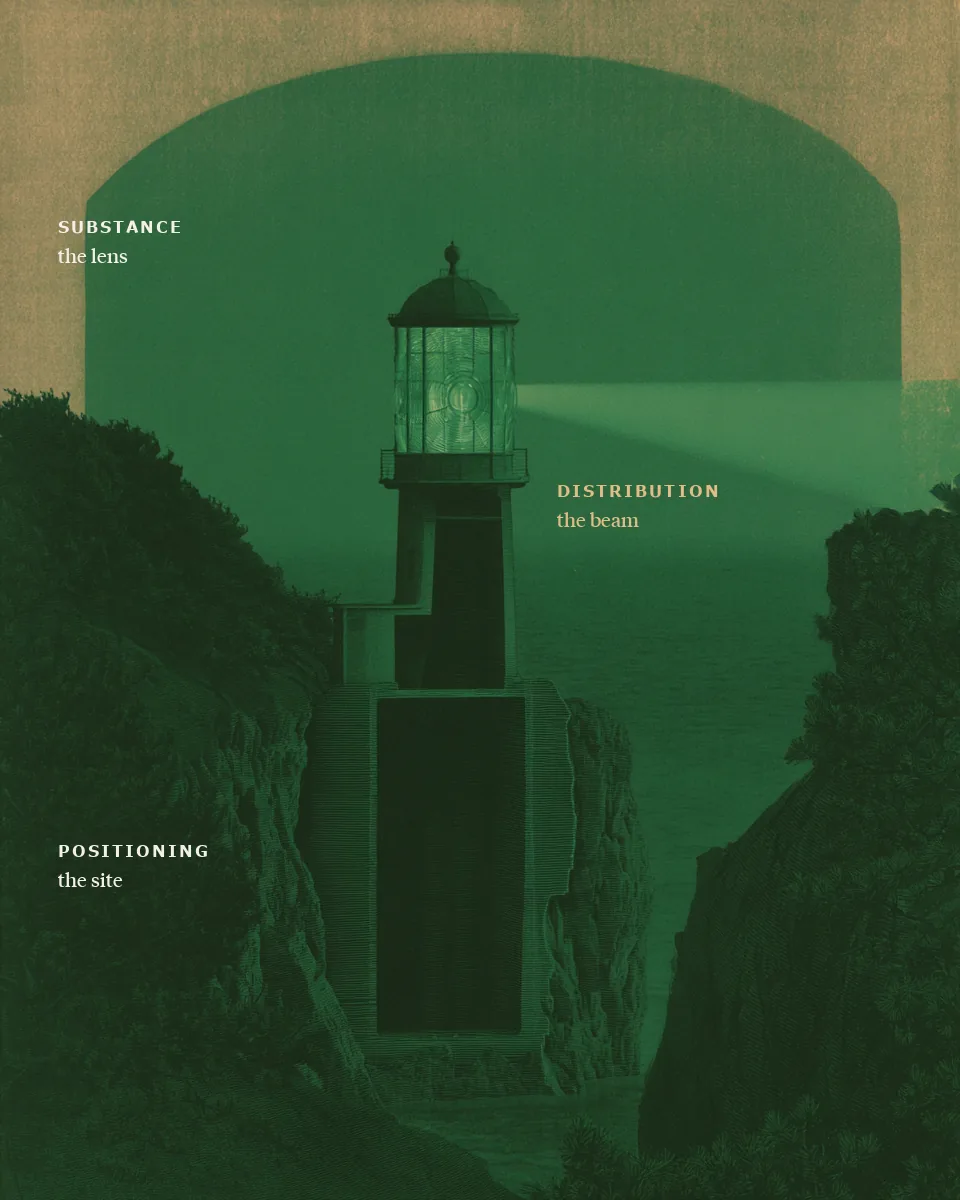
The order matters. Begin with distribution and you produce reach without a line. Begin with positioning and you build a brand the market recognizes.
How do you measure success, and is the effort worth it?
You measure a personal brand not in likes, but in qualified inquiries, a noticeable conversation advantage, and return. Antje Lenk, for instance, a managing director with 25 years in interim management, turned a near-dormant profile into a sales pillar for her company in about nine months, with qualified inquiries and measurable business rather than mere reach.
Her full case is documented in the Antje Lenk reference. The hard signals are not the obvious ones. Profile visits, inquiries with context, candidate contact, and concrete sales conversations say more than reach. Which metrics actually count is covered in measuring visibility.
Whether the effort pays off turns on one question: does public presence create a conversation advantage that would not have existed otherwise? Where it does, visibility becomes measurable reputation, and the effort returns as better conversations.
Who is a personal brand worth it for, and who not?
A personal brand is worth it for founders whose real capability is larger than their public picture, and who work in a market where trust decides outcomes. Builderz builds such brands for a focused circle of seven clients with more than 55 million followers between them. For someone who only wants reach, it is the wrong path.
Personal branding is not an end in itself. It pays where the first impression helps decide expensive choices: for founders, managing directors, and experts in explanation-heavy markets. It does not require large reach. Depth with the right people is enough, as personal brand without large reach shows.
Anyone taking it seriously needs a system rather than isolated posts. It often takes an editorial process that makes the judgment visible without inventing it. How to recognize a good system is covered in choosing a LinkedIn agency. What a personal branding agency actually does, and what it costs, has its own article.
Sources and context.
This page uses external sources as context. The framing and terms are Builderz-specific.
- Edelman and LinkedIn: 2025 B2B Thought Leadership Impact Report
- LinkedIn B2B Institute: the 95-5 Rule
Frequently asked questions.
What does building a personal brand cost?
It depends on whether you write yourself or use an editorial team. Doing it yourself mainly costs time, realistically several hours a week. An agency costs money but saves time and adds structure; it makes sense when the substance exists but the time and editing do not.
Do I have to become a creator and post constantly?
No. A personal brand comes from a recognizable line over time, not from daily posting. A few substantial posts with a clear point of view do more than high frequency without a line.
Does personal branding work for reserved founders?
Yes. It is not about self-display but about making judgment and experience legible. Quiet, precise voices are often more credible in B2B than loud ones.
How quickly do first results show?
Usually after several months of consistent presence, not weeks. Profile visits and the quality of conversations often shift first; measurable inquiries follow once the same themes appear repeatedly.
Keep reading in the library.
Builderz System
Visibility has to become trust.
Builderz builds LinkedIn systems for founders and executives who want to become clearer in the market, not louder.