Why don't impressions and likes show whether LinkedIn is working?
Impressions and likes show reach, not effect. An impression says a post was delivered, not whether the right person understood the right idea. So reach is a diagnostic signal, not a goal.
The most common measurement error is to pin effect on what is easiest to count. Likes and impressions are visible and fast, and say the least about trust.
Anyone who wants to measure reputation should measure the causes, not the symptoms: which signals show that visibility is becoming reputation?
Which signals sit closer to trust?
Profile signals sit closer to trust than reach: profile visits, dwell time, and returning visitors show that people are seeking more context. In one Builderz case, profile visits rose from around 70 to over 1,000 across roughly two years.
The full case is documented in the Dieter Leikermoser reference. A profile visit is a small but real decision: someone wants to know more than a single post shows.
That is closer to a conversation than any quick like, and so a better early signal for reputation.
When are comments and reactions meaningful?
Comments are meaningful only when they are relevant. Many reactions mean little if they come from the wrong people or for the wrong reasons. What counts are replies showing that a market problem was hit.
A short, expert reply from a real decision-maker outweighs a hundred generic likes. B2B decision-makers in particular often do not react visibly. Their attention shows later, not in the comment field.
So the number of reactions is a weak measure. The kind of reaction says more.
What is the single most important signal?
The most important signal is conversation quality. Do prospects ask more precisely? Do candidates arrive better prepared? Do partners recognize the fit faster? Then visibility is working for reputation.
This conversation advantage is the real goal of any public presence. It shows not in a metric but in how a first conversation begins.
Where conversations get easier, the measurement is basically already answered: visibility is creating the right memory.
How do you build a simple measurement logic from this?
You order the signals by their closeness to the business: impressions show reach, profile visits show interest, qualified inquiries show trust. Only the third stage is reputation in measurable form.
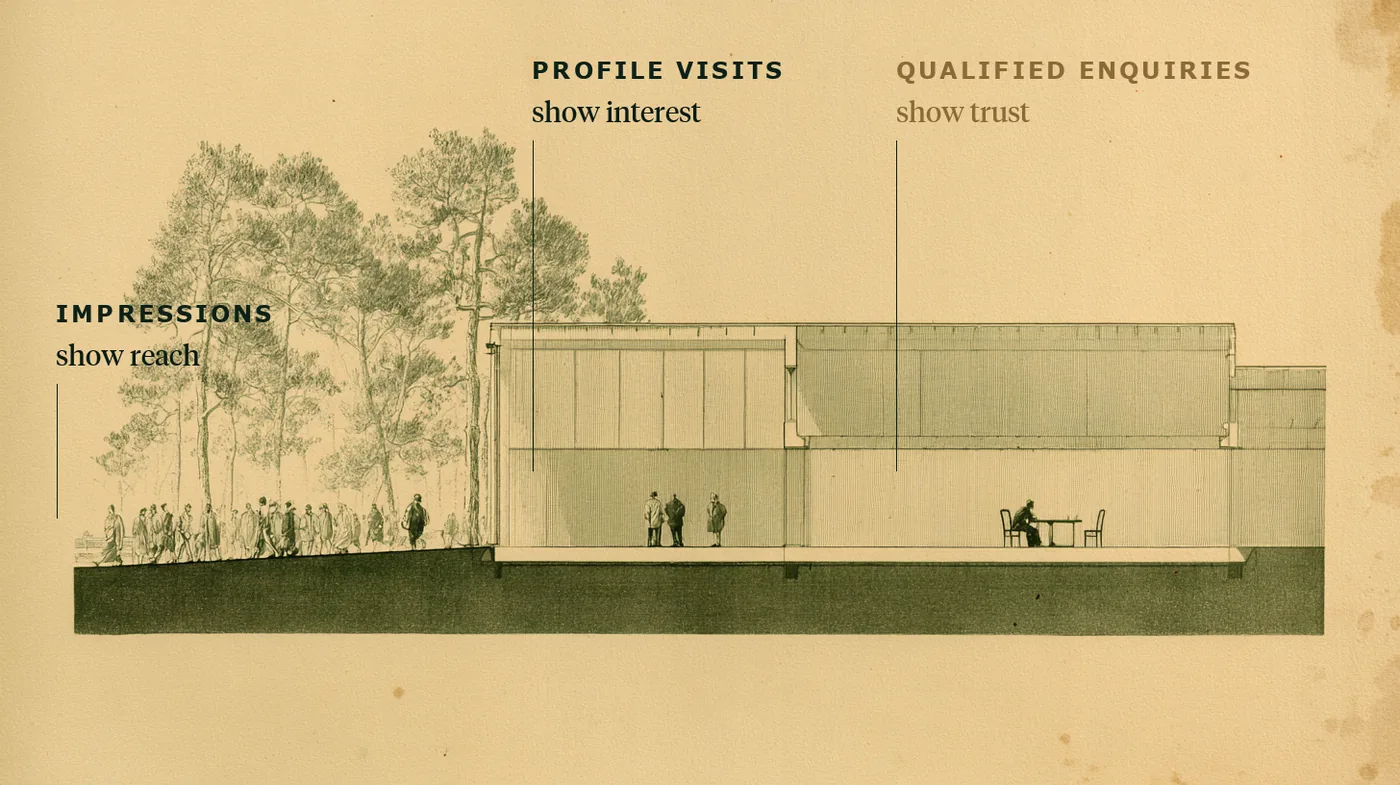
It helps to watch the signal-to-noise ratio: how much of the attention is relevant to your own market? Reach in the wrong audience is not progress.
So measurement gets simple: chase the first stage and you optimize the easiest number; chase the third and you optimize the most important, and measure whether visibility becomes reputation.
Frequently asked questions.
Which tools do you need to measure LinkedIn impact?
Fewer than you think. The most important signals are visible without a special tool: conversation quality, inquiries, profile visits. LinkedIn's own analytics and a look at who reaches out are enough to start.
How often should you measure?
Not daily. Reputation grows over months, so monthly or quarterly reviews make more sense. Daily measuring tempts you to optimize for reach instead of impact.
How can you tell decision-makers are reading without reacting?
By quiet signals: qualified profile visits, follow requests, and direct messages months after a post. With decision-makers, visible reactions are the worst indicator.
What is a good engagement rate on LinkedIn?
Two to five percent is common. More important than the rate is who the engagement comes from: 17% from the wrong people is worth less than 3% from the right ones.
Keep reading in the library.
Builderz System
Visibility has to become trust.
Builderz builds LinkedIn systems for founders and executives who want to become clearer in the market, not louder.