What is a LinkedIn content system, and what is it not?
A LinkedIn content system is not a calendar full of ideas. It is a process that turns real experience into repeatable publishing without flattening the voice. Visibility is the result of a system, not of discipline alone.
The difference matters. A calendar says when you post; a system says from what. Without a system, consistency hangs on willpower, and willpower breaks first in a full week.
So a good system carries a personal brand through phases where motivation is missing too. It replaces drive with process.
Where does the system begin: with the editorial calendar?
Not with the calendar but with input. Without good input, every plan turns thin. Input is conversations, decisions, client situations, mistakes, and observations from real work.
The closer the input sits to the work, the less artificial the output sounds. Feed a system with topic research instead of real decisions and you produce posts that belong to no one.
So a good system begins not with writing but with collecting: a principle the ghostwriting process shares.
How does experience become a post?
Through compression. Not every experience is a post; compression brings a situation down to the question that is relevant for the market. That is the difference between a diary and a public position.
A client situation becomes a post only when it answers a general question others also have. The specific supplies the proof; the question supplies the relevance.
Which questions are worth it is decided by topic strategy; how substance becomes trust, by B2B thought leadership.
Why does approval need rules?
Because good approval does not only check commas. It checks voice, risk, accuracy, and whether a post is worth saying at all. That protects founders from generic and from careless content alike.
A post that performs well but is factually off harms a personal brand more than it helps. For the person, their reputation is at stake, not a single post's metric.
That is exactly the reputation risk a system with clear approval rules avoids.
Does distribution belong in the system, or does it end at posting?
Distribution belongs in the system. A post is not finished when it is published. Comments, replies, profile visits, and follow-up conversations are part of the work. In one Builderz case, 20 posts at a weekly cadence over 19 weeks produced +270% followers.
The full case is documented in the Sarah Gäbler reference. What mattered was not the number of posts alone, but that the system reliably linked input, compression, approval, and distribution.
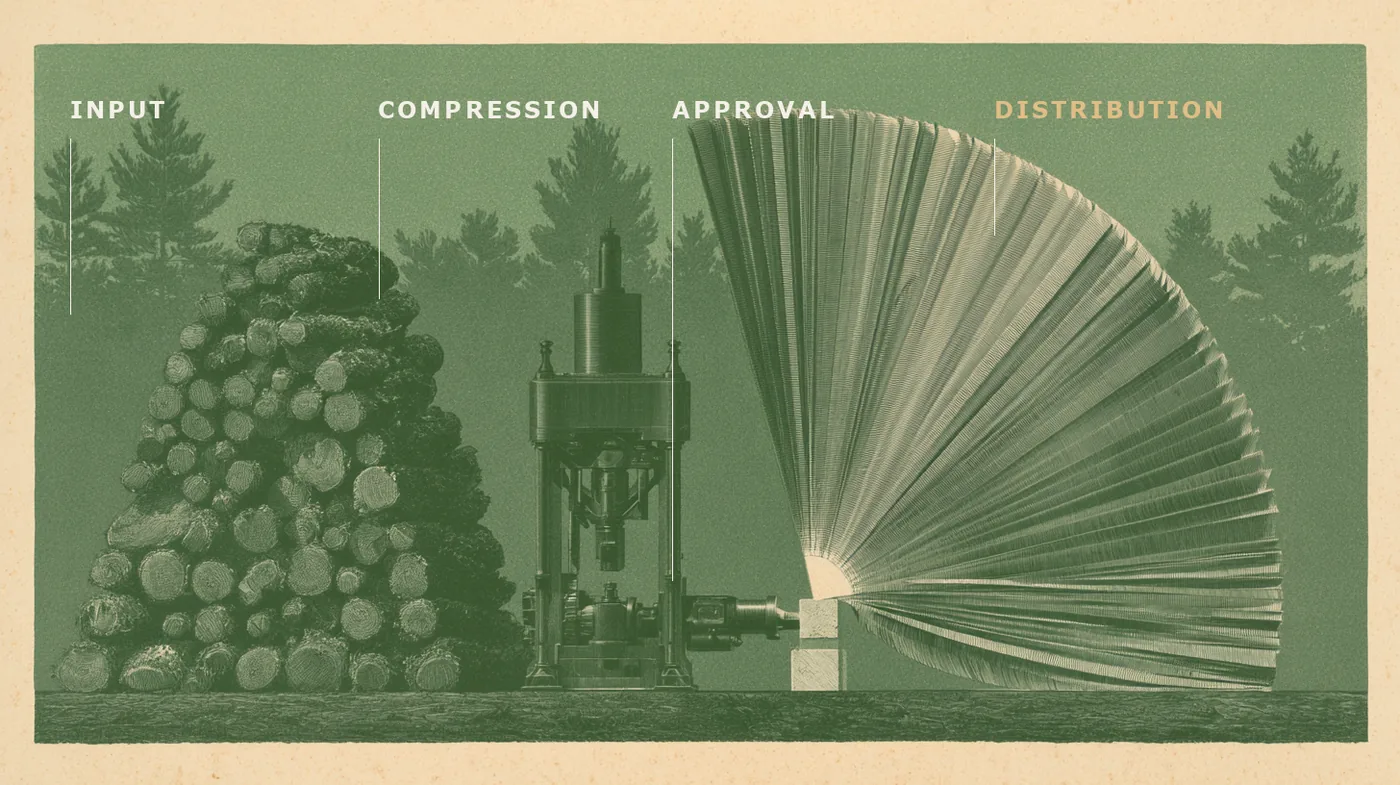
Without that last step, LinkedIn stays a shop window with no follow-through. With it, regular visibility becomes a reputation that opens conversations.
Frequently asked questions.
How often should you post with a content system?
Consistently, not frequently. One or two substantial posts a week, reliable over months, do more than daily posting in bursts. The system makes the cadence sustainable, not maximal.
How much time does a content system cost?
Run yourself, several hours a week, mostly for input and compression. With an editorial team it drops to roughly 30 to 60 minutes a week for input and approval.
Do you need tools for a content system?
Barely. More important than tools is the process: a reliable path from the real situation to the approved post. Tools help with planning and distribution but do not replace a system.
Build it yourself or with an editorial team?
Yourself if time and a clear voice exist. With an editorial team if substance exists but time or structure do not. The system stays the same; only the hands change.
Keep reading in the library.
Builderz System
Visibility has to become trust.
Builderz builds LinkedIn systems for founders and executives who want to become clearer in the market, not louder.